CELLULOSE WOOL APPLICATIONS
Igloo cellulose wool has a wide range of applications in construction. Our material is suitable for use in almost all types of interior insulation, from floors to ceilings, walls, and pitched roofs.
INTERIOR INSULATION OF BUILDINGS
Cellulose wool is used for internal insulation of buildings. In renovation projects, it helps to reduce energy losses in the building. Our material provides thermal and acoustic comfort and guarantees a pleasant microclimate in summer thanks to a phase shift that is more than twice as high as that of mineral wool.
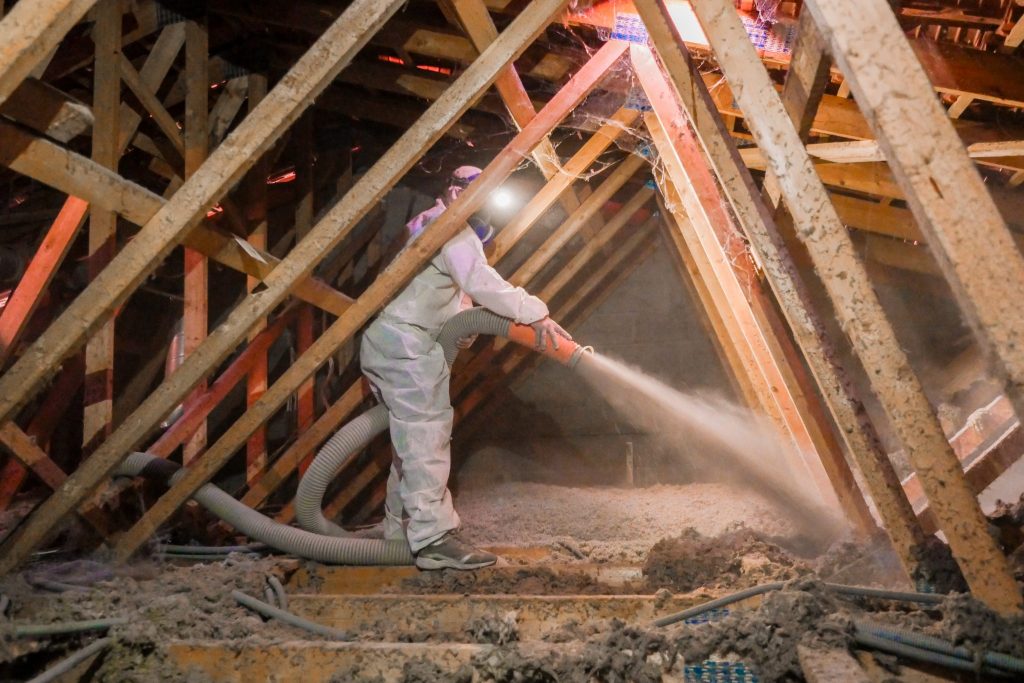
INSTALLATION IN UNUSED ATTICS AND FLAT ROOFS
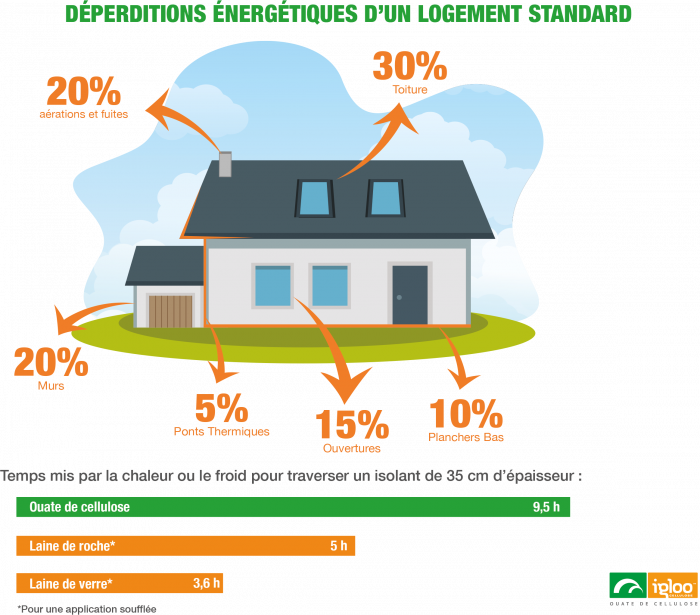
In an average building, the roof accounts for almost 30% of energy loss. Poor attic insulation can lead to high economic and energy costs.
By choosing cellulose wool, you slow down heat transfer by almost 10 hours (compared to less than 5 hours for blown mineral wool).
Thanks to its fluffy texture, cellulose wool fills the smallest gaps and reduces thermal bridges.
Insulation using the blow-in method is relatively accurate and quick – insulating 100 m² usually takes a few hours.
This is definitely the most popular solution.
INSTALLATION IN WALLS
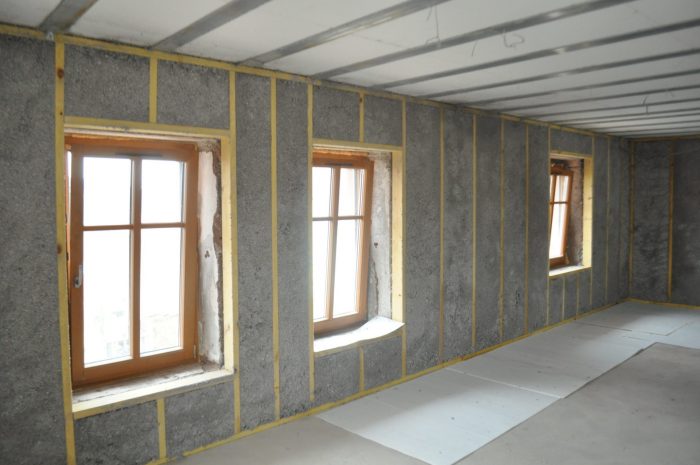
Cellulose wool wall insulation can be installed in various ways:
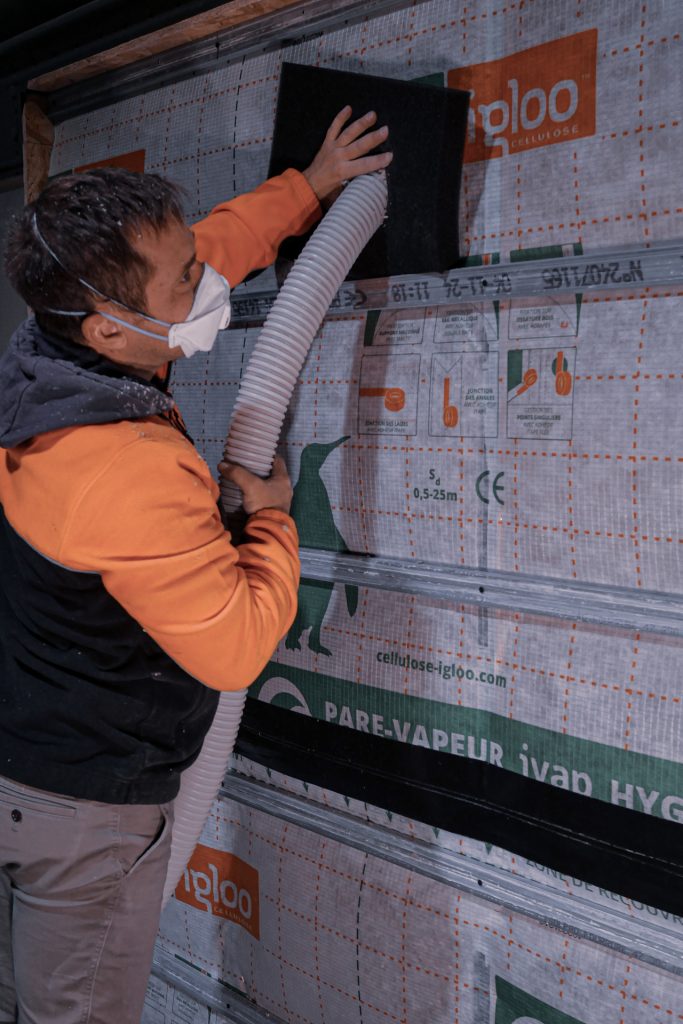
Blowing into wall partitions:
As part of the repair work, cellulose wool can be blown into the walls. This technique requires preparatory work involving the installation of studs and a vapor barrier, which will be pierced to allow blowing. Use dedicated plugs and tapes to close the installation holes.
Cellulose wool is particularly valued in frame constructions, where it can be easily applied to walls during prefabrication.
Wet insulation spraying:
In the case of uneven ground and the absence of a supporting structure, wet application is also possible. This technique remains relatively uncommon, as it requires specific conditions and technical qualifications.
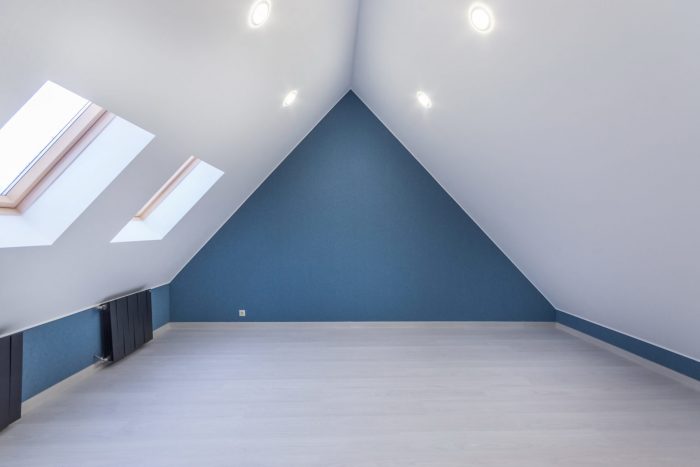
INSTALLATION IN SLOPING ROOFS
In the case of usable or adaptable attics, cellulose wool can be blown into sloping ceilings. In order to install the vapor barrier properly, it is necessary to attach battens between the rafters. Holes for blowing in insulation can be prepared in advance or made on the spot using a so-called pin.
In the case of drywall or paneling, cellulose insulation is installed after the walls have been completed, usually from above or through service holes.
Request a quote.
Are you a professional and would like to receive a quote for the delivery of Igloo cellulose wadding?
Find an applicator.
Are you a private individual and would like to contact one of our certified partners?