CELLULOSE WOOL INSTALLATION
Cellulose wool is a thermal and acoustic insulator that has a number of different applications in construction.
Due to its loose form, Igloo cellulose wool is suitable for blowing, inflating, or wet spraying. Our offer includes training for professionals in blowing insulation into usable and unusable attics. Please contact us for further information.
INSTALLATION ON FLAT ROOFS AND UNUSED ATTICS
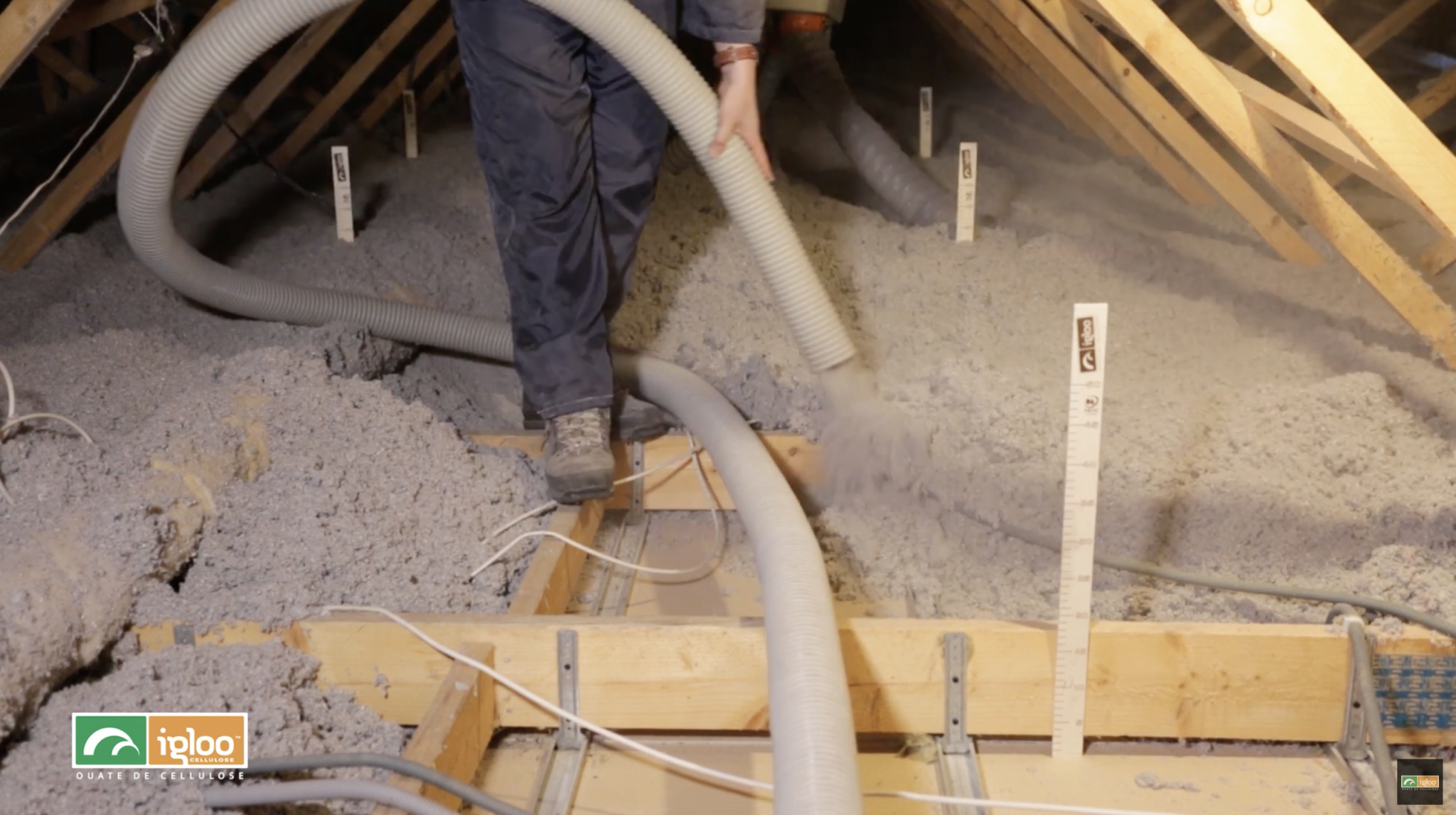
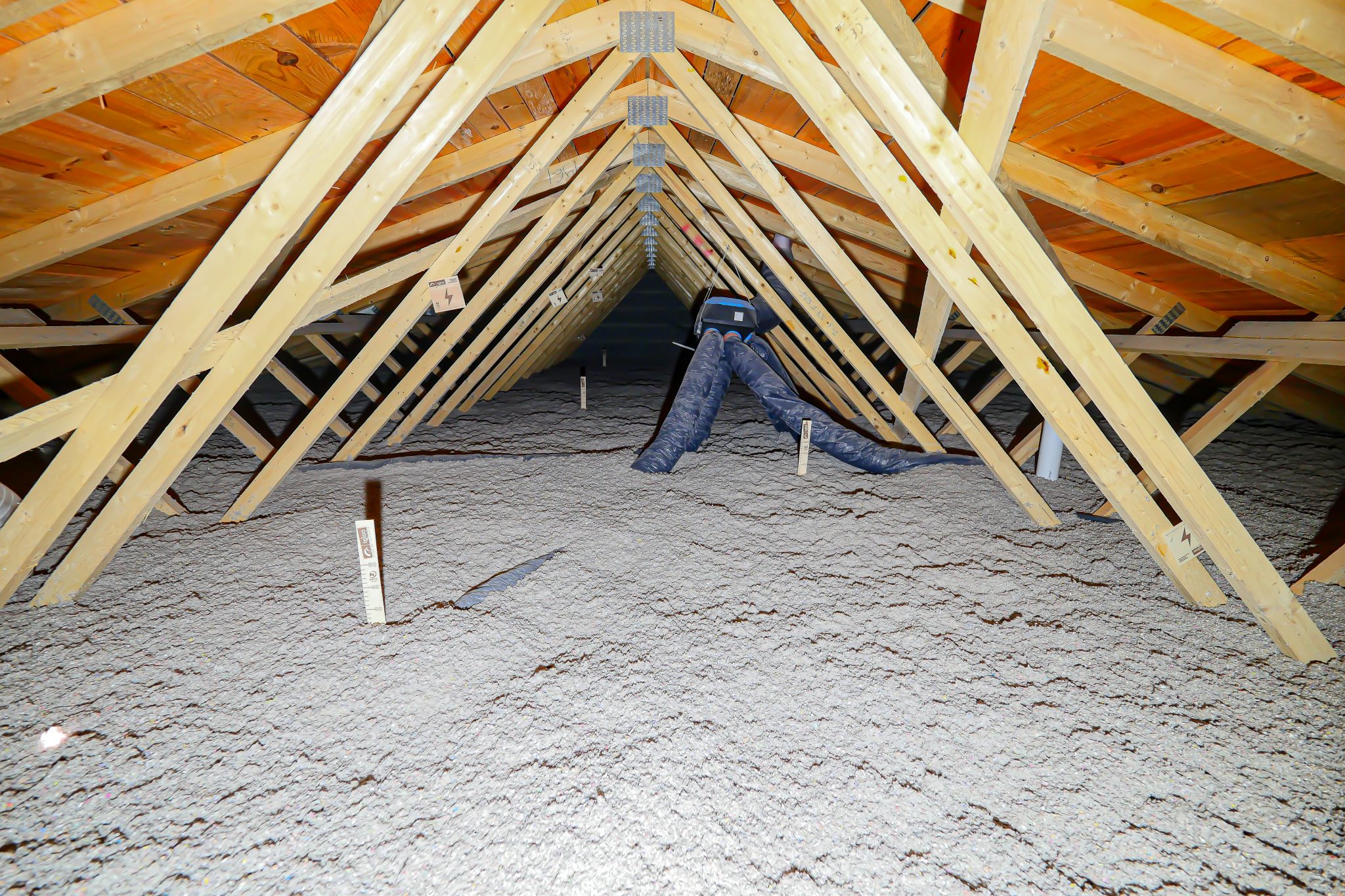
The so-called blown-in insulation of flat roofs is the most common method of installing cellulose wool. Blowing insulation into unused attics proves to be an effective method of insulating roofs for homeowners and cooperative boards, also from an economic point of view.
Igloo blown cellulose wool is particularly suitable for blowing into uninsulated attics. Thanks to its loose form, cellulose effectively insulates even the smallest gaps and prevents the formation of thermal bridges.
Insulation installation requires proper preparation of the attic: checking passageways, installing chimney insulation, securing hatches, identifying electrical devices, checking old insulation, installing protective covers on light fixtures, checking the thickness of blown-in cellulose wool, etc.
Blown insulation in attics in France is regulated by standard NF DTU 45.11, which recognizes this technique as traditional and regulates all the rules that must be followed to ensure that the insulation complies with regulations and is durable. In Poland, standard building regulations and manufacturer's instructions apply.
Insulating the attic with cellulose as part of insulation work can reduce energy losses by as much as 20-30% in a typical residential building.
The use of insulation made from renewable raw materials, such as cellulose wool, provides immediate comfort in both winter and summer.
BLOWING INTO WALLS, ROOFS, AND FLOORS
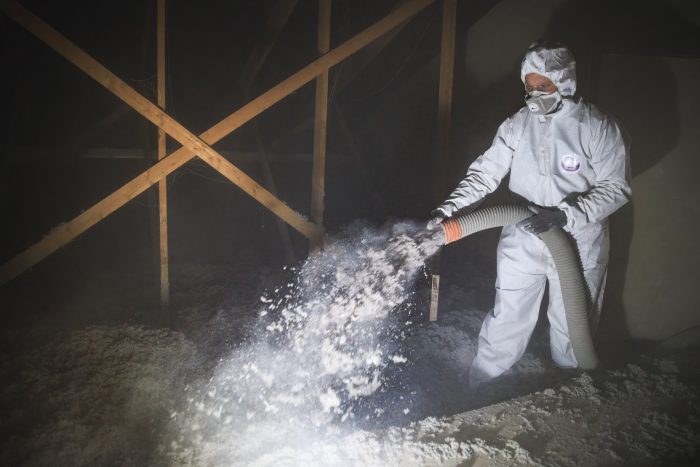
Igloo cellulose wool can also be installed in walls, ceilings, and floors using the blow-in method.
The implementation of such solutions is becoming increasingly common, especially in the case of timber frame constructions.
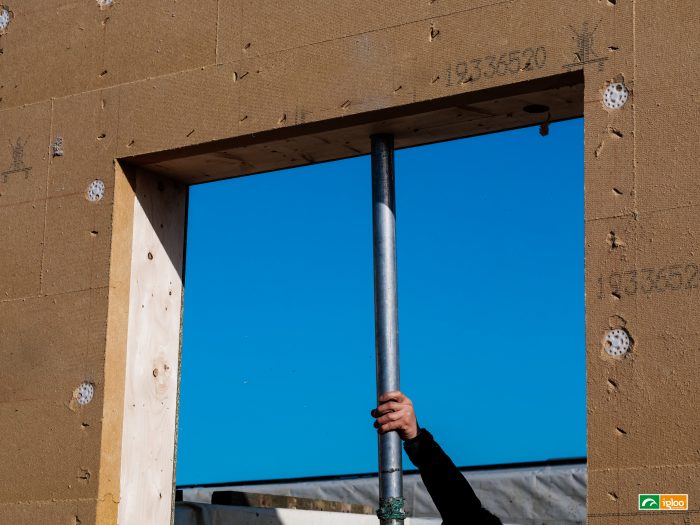
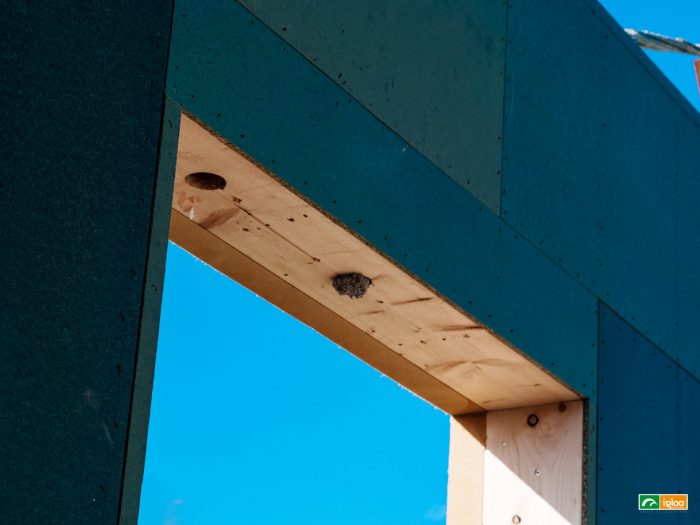
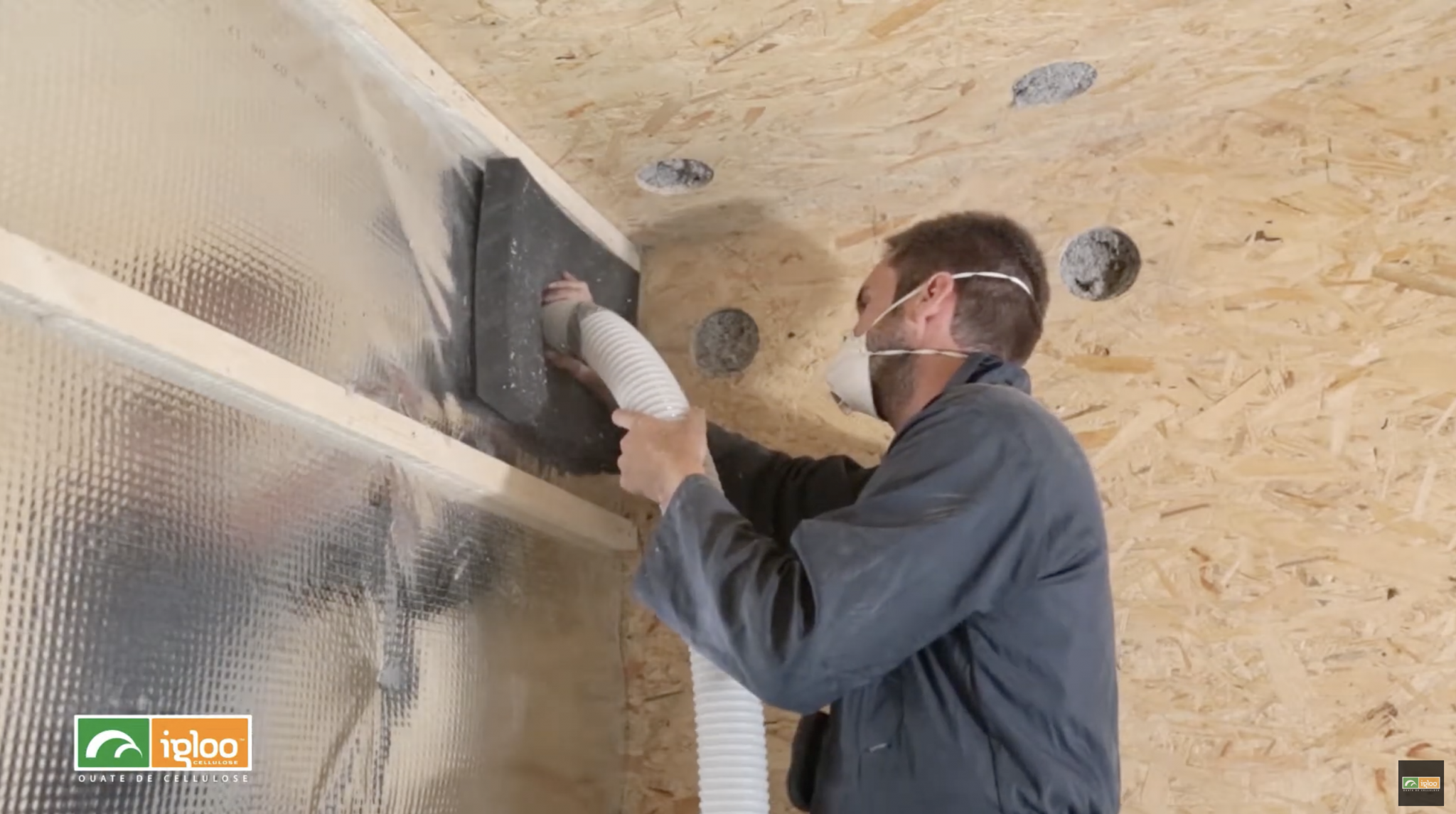
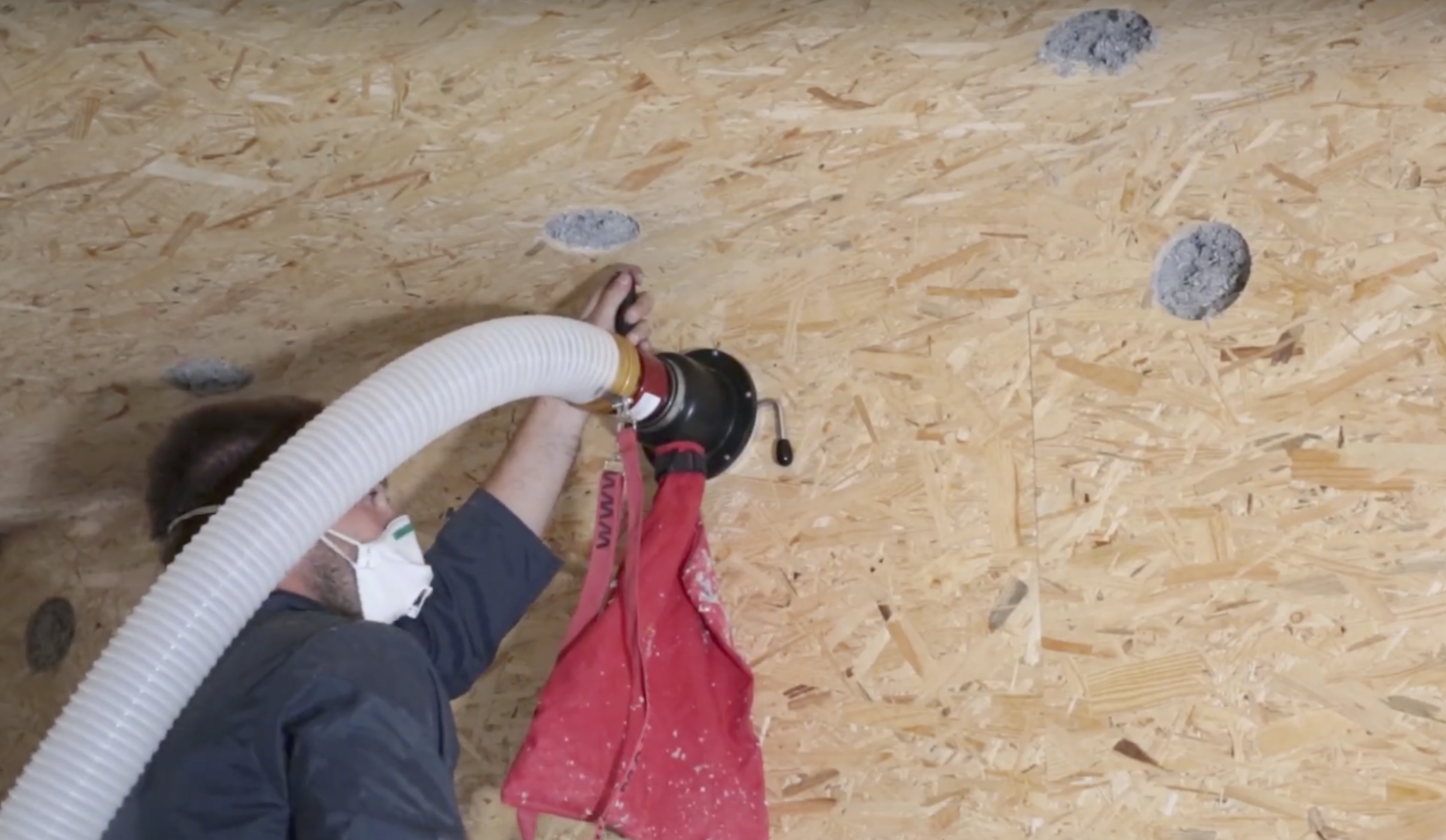
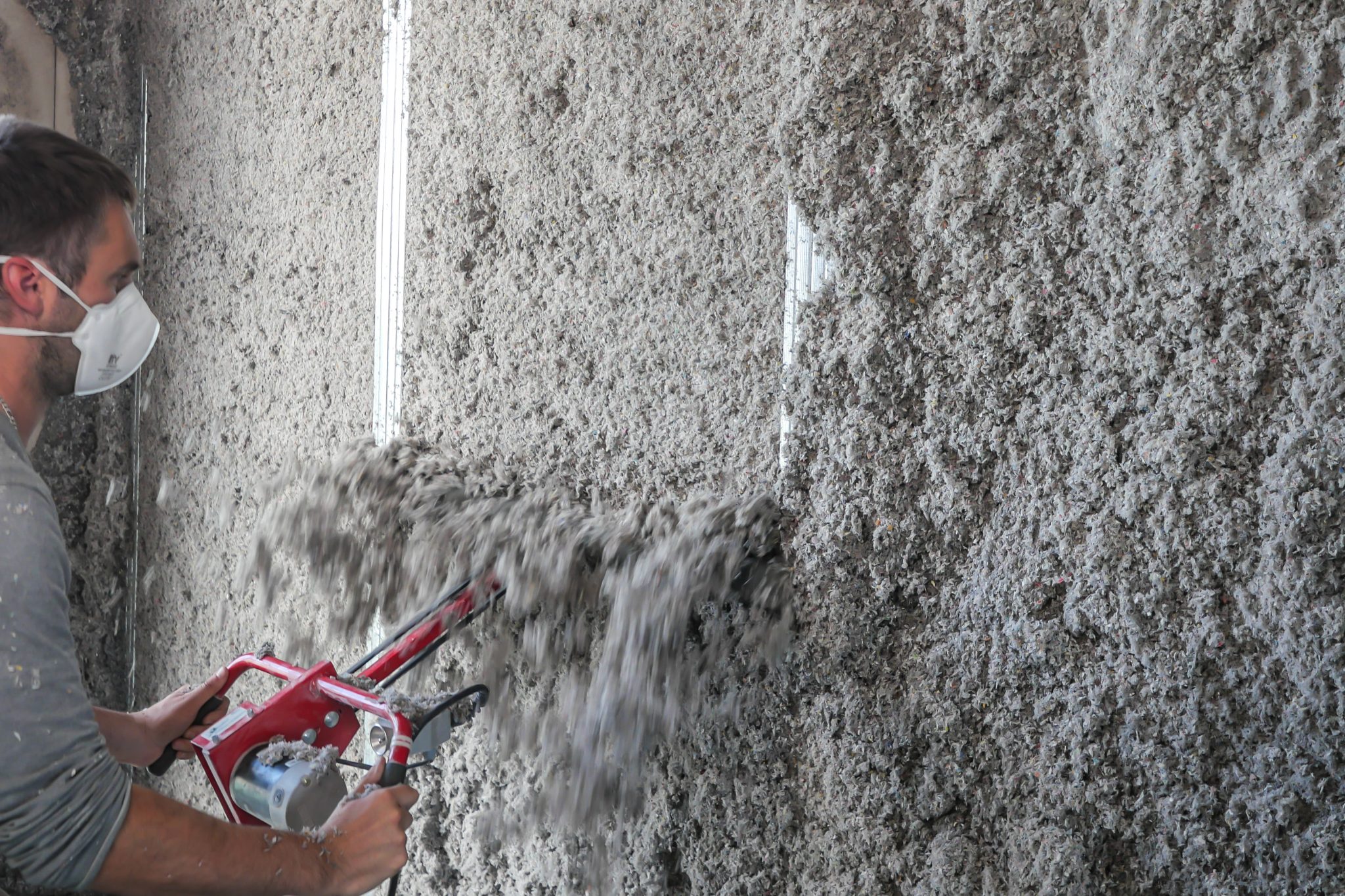
Blowing into walls involves forcing dry cellulose wool into a building partition under pressure using a hose connected to a blowing machine.
Cellulose wool is used to insulate brick or concrete walls, as well as cavity walls.
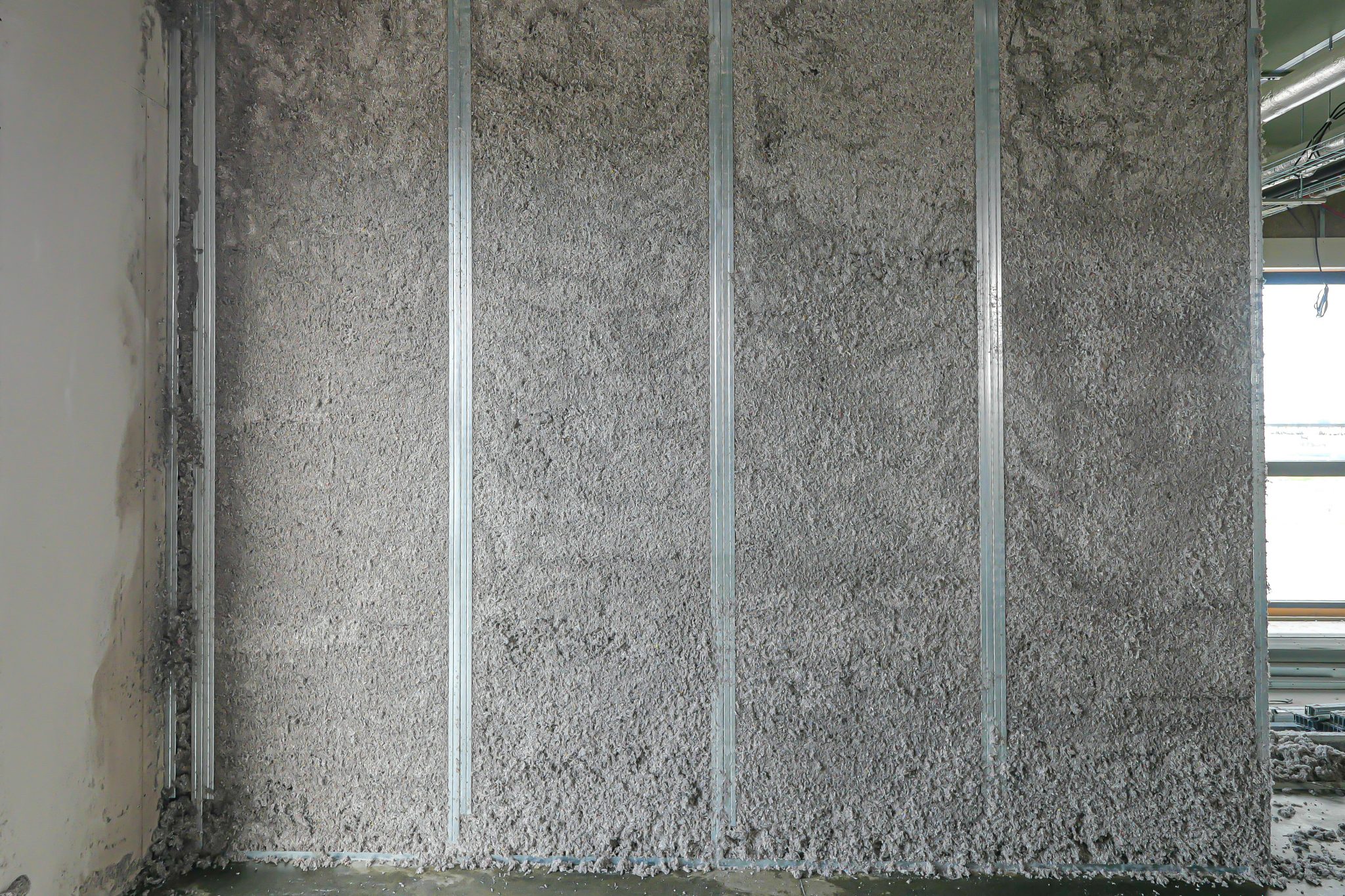
There are many advantages to using the blow-in method. On the one hand, it allows for the insulation of stud walls regardless of their spacing and thickness. This allows for more efficient inventory and supply management. In modular construction, the insulation process can also be carried out in advance on the production line. In this case, the walls are delivered to the construction site in an insulated form. Cutting the material is not necessary. Blown cellulose wool adapts to all types of surfaces and shapes in the partition.
To ensure proper insulation of the partition, it is important to adhere to the specified density parameters. The desired density is achieved by adjusting the blower and the flow rate of the cellulose wool, as well as by using the appropriate tools. The density of the blown cellulose wool can be controlled using a special meter.
WET SPRAYING ON WALLS
If the surface is uneven, you can spray it with wet cellulose wadding.
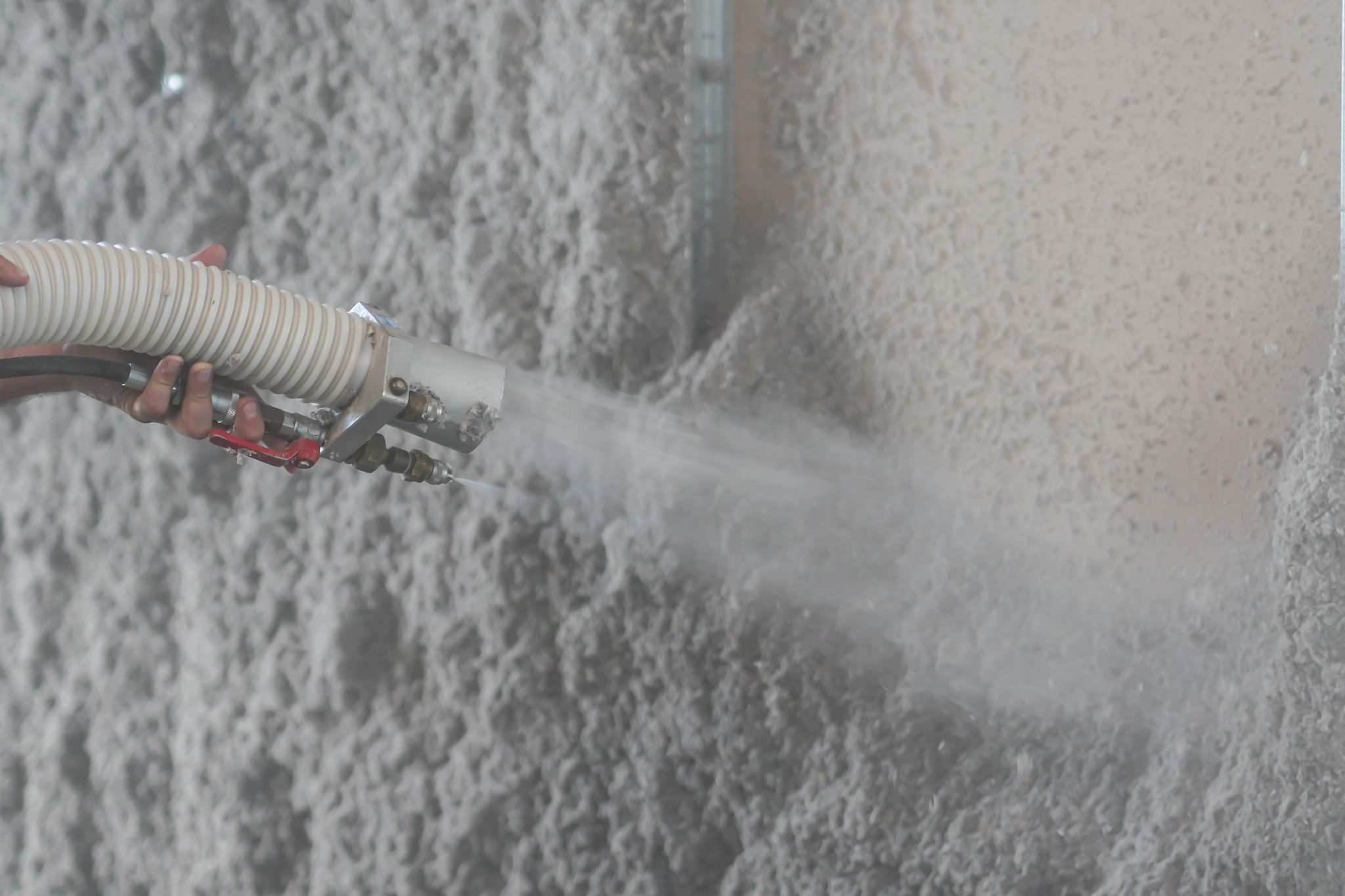
This technique involves applying cellulose wool mixed with a small amount of water under pressure using a blowing machine. A smoothing roller is used to smooth out any excess cellulose wool that accumulates between the studs during application.
Moistening cellulose wool activates the natural fibers' binding agents (lignin and starch), thereby improving the insulation product's adhesion. This effect is achieved by spraying water mist at the outlet of the material hose through a spray head equipped with several spray nozzles. Water is supplied to the head via a hose connected to a pump.
The combined adjustment of the machine and water spray ensures even moistening of the product.
Wet spraying is an extremely attractive method because it allows insulation to be applied regardless of the irregularities of the substrate or the parameters of the supporting structure. This solution also provides additional sound insulation in residential buildings.
The wet spraying technique is relatively complex and requires extensive theoretical and practical training. For these reasons, only a small number of companies offer this service.
Request a quote.
Are you a professional and would like to receive a quote for the delivery of Igloo cellulose wadding?
Find an applicator.
Are you a private individual and would like to contact one of our certified partners?