CELLULOSE WOOL: ACOUSTIC INSULATION
In addition to being an excellent thermal insulator, cellulose wool is also used as acoustic insulation (or soundproofing). Why is cellulose wool preferred for insulating walls, partitions, floors, attics, or ceilings, especially when compared to glass wool or mineral wool? Below we present the most important information you should know about this interesting, sound-absorbing material.
DEFINITION AND TYPES OF NOISE
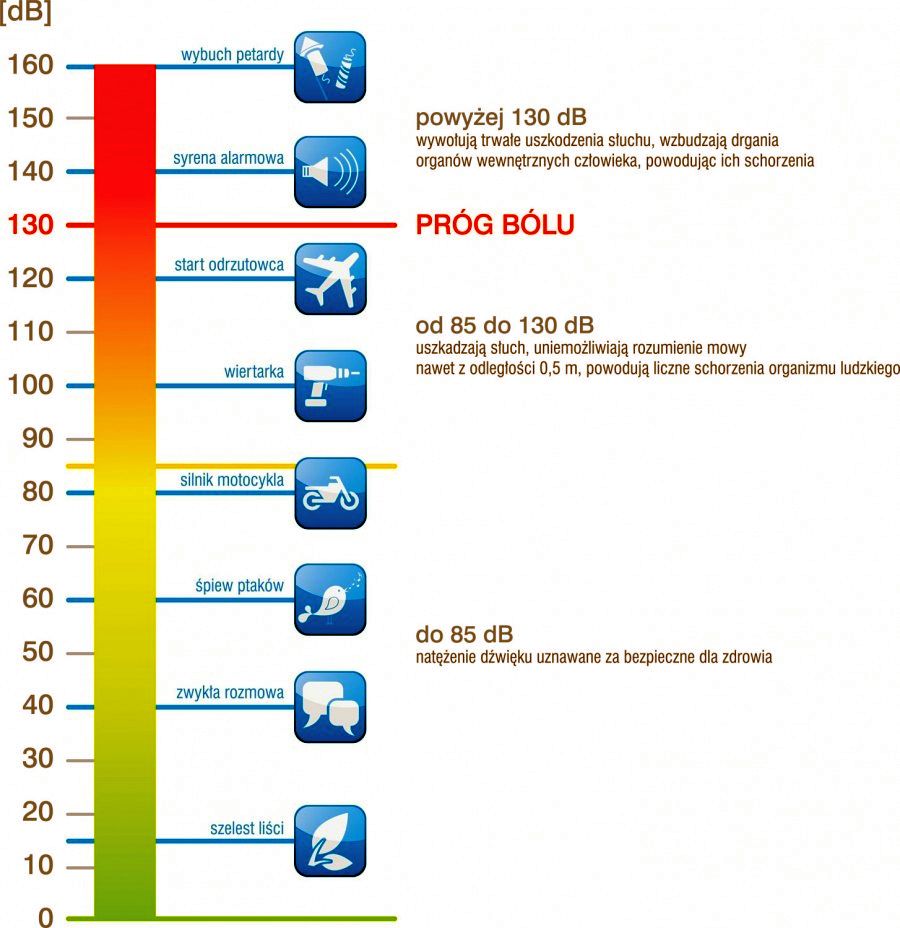
Noise or sound consists of air vibrations and is expressed in decibels (dB). A decibel measures the sound pressure level.
It is important to know that there are four types of noise:
– external noises (e.g., traffic),
– internal sounds (e.g., voice)
– sounds of impact (e.g., an object being knocked over),
– equipment noises (e.g., elevator operation).
Noise intensity is expressed on a scale from 10 to 150 dB. An environment is considered quiet below 40 dB; pain occurs at 120 dB.
Noise levels do not increase. On the other hand, they correspond to a logarithmic scale: doubling the noise level results in an increase of 3 dB.
The purpose of acoustic measures (soundproofing) during construction or thermal modernization is to reduce everyday noise levels. For this purpose, absorbent or damping insulation materials separated from the thermal insulation layer are used.
Note: there should be no hard contact between the insulation and the wall.

SOLUTIONS FOR IMPROVING ACOUSTIC COMFORT
When it comes to sound insulation, the best-known insulators are, of course, various types of wool: glass wool, rock wool, sheep wool, hemp wool, or recycled polyester fibers.
The aim is to use the mass/spring/mass principle to separate the air gap from the mineral absorber by means of a spring, thereby dampening the sound energy at the outlet.
Another option is to use cellulose wool, which is insulation made from recycled paper and has been gaining popularity for years in the field of acoustic and thermal insulation.
WHY IS IT WORTH USING CELLULOSE WOOL AS A SOUND INSULATOR?
In the 1920s cellulose wool gained popularity in North America, where it was an excellent solution for the extremely harsh climatic conditions of Canada and the northernmost states of the USA.
In terms of thermal properties cellulose wool has excellent phase shift capacity (heat penetration through the insulation layer takes about ten hours).
However, cellulose wool is also particularly interesting in terms of its acoustic properties. In fact, due to its density, fiber porosity, and high resistance to air flow, cellulose wool is a very effective acoustic insulator.
In the case of unused attics, cellulose is a very effective (soundproof) acoustic insulator that protects against outside noise.
Cellulose wool sprayed onto office walls and ceilings provides users with additional acoustic comfort, as its adhesion to the substrate and density significantly reduce the propagation of noise in the air.
Particularly popular in green building and/or timber frame construction, cellulose insulation is a versatile eco-friendly insulationthat can be used for insulating attics, pitched roofs, walls, and floors. Igloo cellulose wool also has a low dust content to improve installer comfort. It is also a non-allergenic and non-irritating product (does not contain needles).
Request a quote.
Are you a professional and would like to receive a quote for the delivery of Igloo cellulose wadding?
Find an applicator.
Are you a private individual and would like to contact one of our certified partners?